

Let's talk about edible spreadable fats. Fat is a vital nutritional component of the human diet though, like most things in life, you can definitely get too much of a good thing. Americans particularly consume far too much fat. The American Heart Association indicates that total dietary fats should be limited to 7-10% of your caloric intake. If you eat a lot of processed or fast foods you are already probably getting too much fat so skip the spreadable ones, but if you are mostly eating your own cooking consisting largely of whole, real ingredients feel free to spread some of that rich goodness on your toast!
The two readily available spreadable fats are margarine and butter. When I was a kid at the table and said "please pass the butter" I would actually get margarine which was colored to look like butter. We bought it because it was cheap and abundant and, at the time, was actually thought to be better for you than butter.
Butter is made by churning milk-fat (cream) until it separates into a dense yellow mass and a light liquid. Butter has been consumed by humans since the domestication of milk-producing animals such as sheep, goats, water-buffalo, and cows. It is consists of a uniform blend of fatty acids and water which is stable and solid at room temperature. The problem with butter, like all animal fats, is that it contains cholesterol (30mg. / Tbsp = 10% of recommended daily value) which raises the risk of heart disease and death. Most of us don't care and eat it anyway because if we're going to die anyway butter seems like a nice way to go.
Margarine is a butter alternative that was invented in 1869 by French Chemist Hippolyte Mège-Mouriès (he named it "oleomargarine") in response to King Louis Napoleon III's challenge. The king had offered a prize to anyone who could develop an alternative to butter suitable for use by the armed forces and the poor (butter has historically been a relatively rare and expensive commodity). It was originally made with beef fat, but shortages during the two world wars, and technological advances led to the creation in the 1950s of margarine made exclusively from vegetable oils. Vegetable oils had no cholesterol but were not very useful as spreadable fat because they were subject to getting rancid and were liquid. Scientists solved both of these problems by a chemical reaction called "partial hydrogenation" where molecular hydrogen is bonded to the lipids in liquid oils to make a substance that is stable and solid at room temperature. The big problem with partial hydrogenation is that it creates something called "trans-fat" as a byproduct. Trans-fats have been implicated in circulatory diseases. Both Denmark and Switzerland have banned trans-fats for human consumption. The bottom line is that margarine is worse for you than butter.
Is there an alternative? Thankfully, yes! Coconut oil is an edible oil extracted from the meat of coconuts. Throughout the tropical world, it has provided the primary source of fat in the diets of millions of people for generations. It is naturally stable, slow to go rancid, solid at room temperature, and has no cholesterol. In addition, recent studies are beginning to indicate a potential for other healthful characteristics (e.g. help for reduced immune function, thyroid disease, heart disease, obesity, heart disease etc.). I've been using coconut oil to make an alternative to butter that we've been using and strange-to-say I've gotten to prefer it to butter. The mild coconut flavor is very pleasant and adds a great taste to toast, steamed vegetables etc. Coconut oil is white (looks like lard) which to me is a bit unappetizing so to make it a more palatable spread I add some salt and a few drops of Annatto oil which is natural, delicious, and you can easily make yourself. BTW, I tried using yellow food coloring but it is water-based and doesn't integrate with the coconut oil very well (kinda like oil-and-water).
Here is how to make your own Annatto Oil:
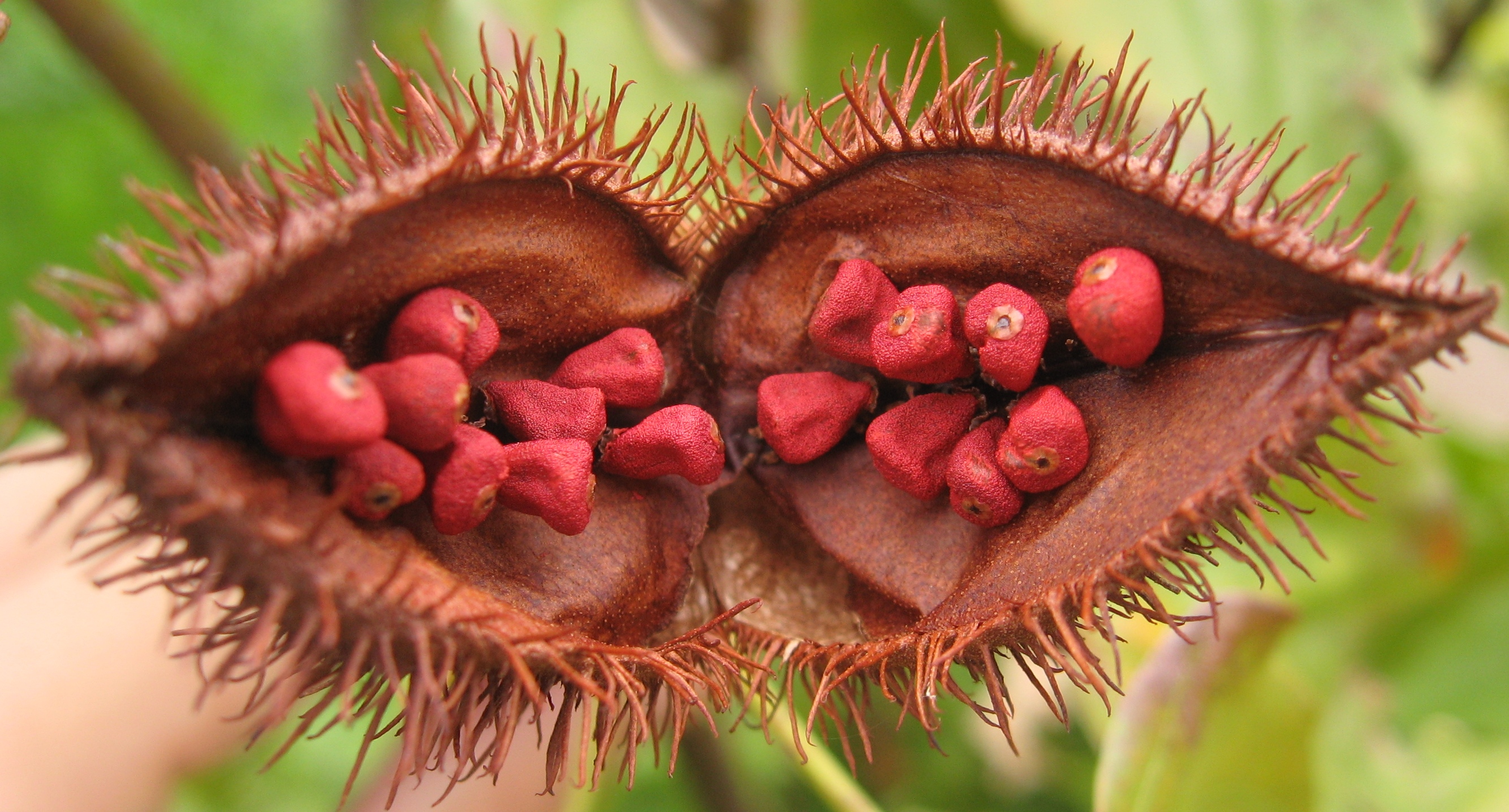
To make Annatto Oil you'll need:


- 1 cup Olive Oil
- 2.5 Tbsp Annatto (Achiote) Seeds
Heat the oil and the seeds in a small pan until the seeds begin bubbling steadily. Remove from the heat (don't overheat). Let the seeds and oil cool. Strain out the seeds and store the oil in a container. You can use this in your cooking (makes a nice yellow rice) so keep it around.
Here's how to make Coconut Oil "Butter":


- 1 cup Coconut Oil
- 1/2 tsp Kosher Salt (less if you're using table salt)
- 1/8 tsp Annatto Oil
Warm the coconut oil slightly by microwaving for 30 seconds, add the salt and the annatto oil and mix it all together to a consistently colored paste (in the photo to the left I compare it's color to a stick of butter as a reference). Then place it in a small plastic container in the refrigerator for about 30 minutes to solidify again. Pop it out of the container onto your butter dish and enjoy!
No comments:
Post a Comment